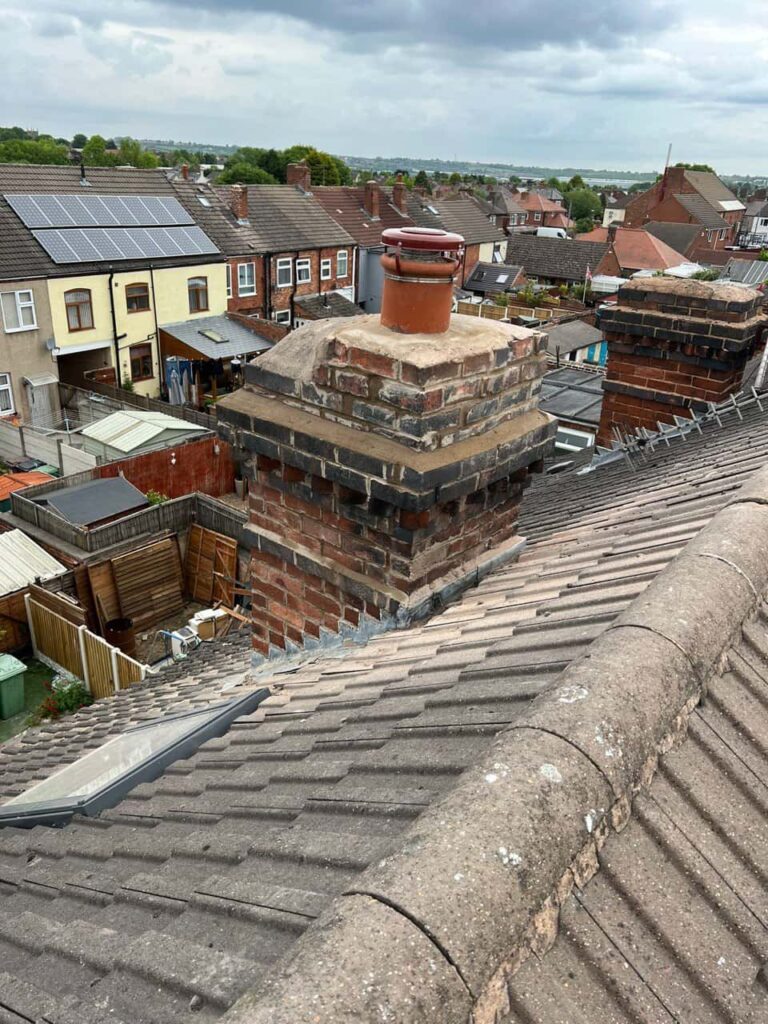
Chimneys are a distinctive feature of many properties, but their position above the roof makes them particularly exposed to rain, wind and changing weather conditions. Lead flashing around a chimney plays an important role in preventing water from entering the vulnerable junction between the chimney and roof.
When flashing deteriorates or chimney masonry develops defects, water can find a route into the roof structure. For property owners in Hayling Island, Hampshire, understanding the warning signs can help ensure problems are addressed before they become more extensive.
What Is Lead Flashing Around a Chimney?
Lead flashing is a weatherproof material installed where the chimney meets the roof. Its purpose is to create a watertight transition between two different surfaces and direct rainwater away from the junction.
Flashing may be installed around different parts of the chimney, including the front, sides and rear. The precise arrangement depends on the design and construction of the roof and chimney.
Because flashing is constantly exposed to the elements, it can eventually deteriorate or become displaced.
Why Can Chimney Flashing Fail?
Several issues can affect lead flashing over time. Repeated exposure to rain, wind and temperature changes can cause movement or deterioration. Flashing can also become loose where it has been poorly secured or where the surrounding masonry has deteriorated.
Movement between the chimney and roof can create gaps around the flashing. Even a relatively small opening can provide a route for rainwater to enter.
A professional inspection can help determine whether the flashing itself is defective or whether another part of the chimney or roof is contributing to the problem.
Signs That Chimney Flashing May Need Repair
There are several warning signs that can indicate a problem around a chimney.
Water Staining on Ceilings or Walls
Damp patches, brown staining or peeling finishes around the upper parts of a property can indicate water ingress. Although the source may not be immediately obvious, defective chimney flashing is one possible cause.
Cracked or Loose Flashing
Visible gaps, lifted sections or damaged lead around the chimney should be assessed. Flashing needs to remain properly positioned to direct water away from the roof junction.
Deteriorating Chimney Mortar
Cracked or missing mortar joints can allow water to penetrate the chimney structure. Deteriorating masonry can also affect the areas where flashing is secured.
Dampness Around the Chimney
Persistent dampness near the chimney or unusual staining in the loft can suggest that water is entering around the roof-to-chimney junction.
Problems should be investigated rather than assuming that the flashing alone is responsible.
Why Chimney Repairs and Flashing Repairs Go Together
Repairing flashing without addressing deteriorating chimney masonry may only provide a temporary solution. Likewise, repairing mortar or masonry without checking the surrounding flashing may leave an existing route for water to enter.
A proper inspection should therefore consider the chimney and the adjoining roof area together. This helps identify whether the problem is caused by flashing, masonry, roof coverings or a combination of issues.
How Are Lead Flashing Problems Repaired?
The appropriate repair depends on the condition and location of the defect. Localised problems may require securing or repairing an affected section, while severely deteriorated flashing may require more extensive renewal.
Where chimney mortar or masonry has deteriorated, those areas may also need appropriate repair before the flashing can provide reliable protection.
The objective is to restore the weatherproof junction and ensure rainwater can drain away from the chimney and roof correctly.
Why Should Chimney Problems Be Addressed Early?
Water entering around a chimney does not necessarily remain in one location. Continued moisture penetration can affect roofing materials and the underlying structure, while prolonged dampness can contribute to further deterioration.
Addressing visible defects promptly gives a roofer an opportunity to identify the source of the problem and determine the appropriate repair before the affected area becomes more extensive.
This is particularly important for properties in Hayling Island, Hampshire, where roofs and chimneys are regularly exposed to changing coastal weather conditions.
When Should You Arrange a Chimney Inspection?
Consider arranging a professional inspection if you notice damaged flashing, cracked mortar, loose chimney components, water staining or signs of dampness around the chimney.
It is also sensible to have the area checked if a leak repeatedly appears near the same part of the property, particularly when the cause cannot be identified from ground level.
Hayling Island Roofing Repairs can inspect chimney and roof junctions in Hayling Island, Hampshire, identify visible defects and recommend suitable repair work based on the condition of the roofing system.
Conclusion
Lead flashing is an important part of protecting the vulnerable junction between a chimney and roof. Damaged flashing, deteriorating mortar and defective chimney components can all create opportunities for water to enter the property.
Early inspection can help establish the actual source of a leak and determine whether flashing repairs, chimney repairs or other roofing work is required. If you are concerned about chimney flashing or water ingress at your property in Hayling Island, Hampshire, contact Hayling Island Roofing Repairs to arrange an assessment and discuss the appropriate repair.
Call us on: 023 8235 1782
Click here to find out more about Hayling Island Roofing Repairs
Click here to complete our contact form and see how we can help with your roofing needs.