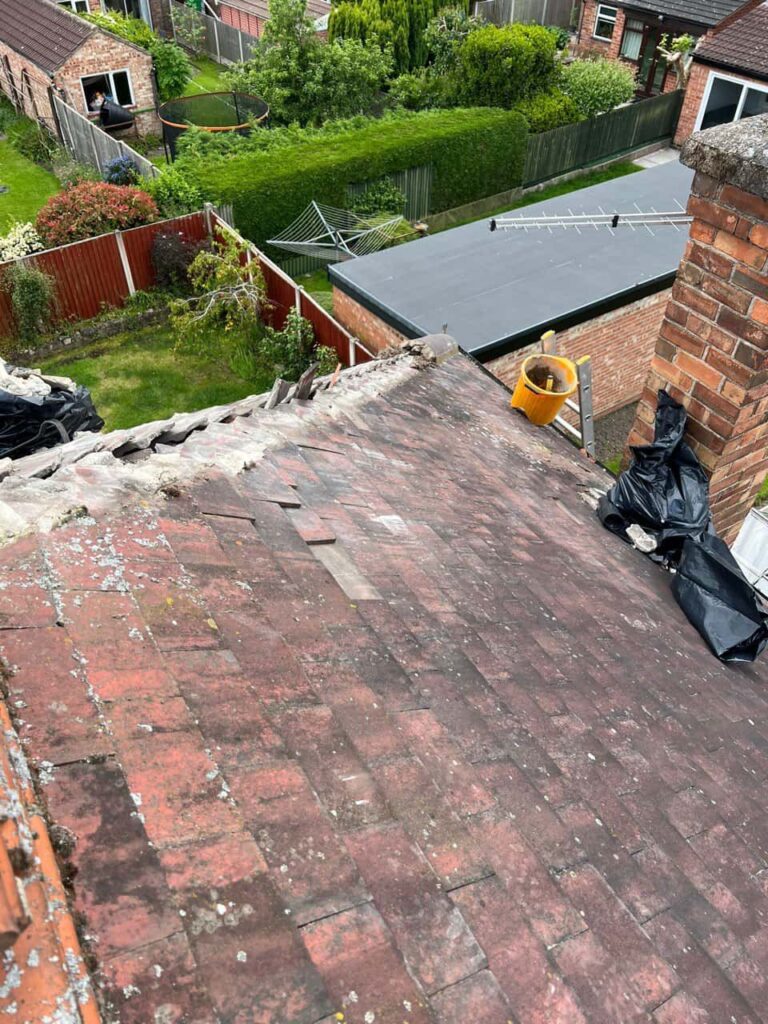
Small roof repairs can be extremely effective when damage is localised and the surrounding roofing materials remain in good condition. Replacing a slipped tile, repairing damaged flashing or addressing an isolated leak can restore the affected area and help the existing roof continue performing reliably.
There can, however, come a point when repeated small repairs no longer make a meaningful difference to the reliability of the roof as a whole. This usually happens when deterioration is no longer confined to individual defects and has started affecting multiple components or sections.
For homeowners in Hayling Island, Hampshire, recognising this change is important. The question is not simply whether another repair can physically be carried out, but whether that repair is likely to provide a dependable solution within the condition of the wider roof.
When Small Roof Repairs Stop Providing a Reliable Long-Term Solution
A roof does not usually move from being repairable to unreliable overnight. The change tends to happen gradually as materials age, fixings weaken and different areas begin requiring attention.
One isolated problem can normally be treated as exactly that: an isolated problem. When defects repeatedly appear across the roof, however, it becomes important to consider whether individual repairs are still addressing the underlying condition.
Signs that deserve closer assessment include:
- Leaks returning despite previous repairs
- Tiles repeatedly slipping or becoming damaged
- Problems developing in several separate areas
- Deterioration affecting multiple roofing components
- Repairs being needed increasingly frequently
- Previously sound areas beginning to develop defects
- Widespread deterioration beneath or around the roof covering
None of these signs alone automatically determines what work is required. Together, however, they can indicate that the roof should be assessed more broadly.
Why Small Roof Repairs Work Well in the Right Circumstances
Targeted repairs remain an important part of maintaining a roof.
If one tile has been damaged while surrounding tiles and fixings remain secure, replacing that tile can be entirely appropriate. The same principle applies to isolated flashing defects, localised damage and specific points of water ingress.
A well-planned repair preserves roofing materials that remain serviceable and concentrates work where it is actually required.
The effectiveness of that approach depends on the repaired section being supported by a roof that remains generally sound. When the surrounding materials are also deteriorating, the reliability of another isolated repair becomes less certain.
The Difference Between a Repairable Defect and Wider Deterioration
It is useful to distinguish between a roof that has a problem and a roof that is developing problems as part of a broader decline.
A repairable defect normally has a specific cause and a clearly defined affected area. Once that cause is corrected, the surrounding roof continues to perform as expected.
Wider deterioration produces a different pattern. Tiles may begin moving in different locations, several areas of flashing can require attention, leaks may develop independently and repairs can become increasingly frequent.
At that stage, each individual fault might still be repairable, but dealing with defects one at a time may no longer significantly improve the reliability of the complete roof.
Repeated Leaks Are Particularly Important
Recurring water ingress deserves careful investigation because it can indicate that the true source of the problem has not been identified or that several weaknesses are present.
Water does not necessarily travel directly downwards from the point where it enters the roof. It can move along roofing components before becoming visible inside the property.
This means repeated treatment of the area directly above an internal damp patch may not resolve the underlying defect.
A broader inspection can trace the likely route of moisture and determine whether one localised weakness or several deteriorated areas are contributing to the problem.
When Repairs Move From Maintenance to a Pattern
Occasional maintenance is normal for many roofs. The more useful question is whether the frequency and nature of the work are changing.
A roof that needs one isolated repair and then remains trouble-free for a long period is behaving very differently from one that develops another defect shortly afterwards.
When intervals between repairs become shorter or problems begin appearing in different sections, it may indicate that deterioration is becoming more widespread.
Keeping the roof’s repair history in mind can therefore help identify when individual defects are no longer completely independent events.
Why Surrounding Materials Determine Whether a Repair Will Last
A repair cannot be considered separately from the materials supporting it.
A replacement tile needs secure surrounding tiles and suitable battens. Repaired flashing needs stable adjacent materials. Work to a roof junction depends on the surrounding components remaining capable of performing their intended function.
Where these materials are sound, targeted repairs can provide excellent results.
Where neighbouring materials are brittle, loose, deteriorated or unstable, repairing one small section may simply move the next point of weakness elsewhere.
This is why assessing the immediate repair area and its surroundings is an essential part of deciding whether further localised work remains worthwhile.
Previous Repairs Do Not Necessarily Mean a Roof Is Failing
A roof with a history of repairs should not automatically be regarded as unreliable.
Well-executed previous repairs can remain perfectly sound for many years. In some cases, the repaired sections may actually be among the more secure areas of the roof while unrelated components subsequently require attention.
The important factor is the overall pattern.
If previous repairs remain effective and new defects are occasional and unrelated, continued maintenance may still be appropriate. If problems repeatedly return around previous work or appear across numerous sections, a wider assessment becomes increasingly valuable.
Roof Age Alone Does Not Decide Whether Repairs Are Suitable
It can be tempting to assume that an older roof should no longer be repaired, but age by itself does not provide enough information.
Some older roofs retain sound coverings and supporting materials and can continue benefiting from targeted maintenance. Other roofs may show more extensive deterioration.
The decision should therefore be based on condition.
A roofer should consider the security of the covering, the condition of fixings and supporting materials, evidence of water ingress, previous repair history and whether deterioration is localised or widespread.
This provides a much more reliable basis for deciding what the roof needs.
Why a Whole-Roof Assessment Can Be More Useful Than Another Quick Repair
When small repairs keep becoming necessary, examining the complete roof can help determine whether those problems are connected.
A whole-roof assessment does not automatically mean that extensive work will be recommended. It may establish that the majority of the roof remains sound and that another targeted repair is entirely sensible.
Alternatively, it may identify deterioration affecting several sections that would otherwise continue generating individual problems.
Either finding is valuable because it allows the next decision to be based on evidence rather than simply reacting to the latest visible defect.
The Aim Should Be Reliability, Not Simply Completing Another Repair
It is often technically possible to repair an individual roofing defect. The more important question is what that repair will achieve.
If correcting one damaged section is likely to restore dependable performance, a localised repair makes sense. If the surrounding roof is sufficiently deteriorated that another fault is likely to emerge elsewhere, repeatedly treating individual symptoms may provide diminishing benefit.
A professional assessment should therefore focus on the expected performance of the roof after the work is completed.
This helps ensure that recommendations are proportionate to the actual condition rather than automatically favouring either repeated repairs or more extensive work.
Roof Assessment and Repairs in Hayling Island, Hampshire
For homeowners in Hayling Island, Hampshire, recurring roof problems are worth considering in the context of the complete roofing system.
At Hayling Island Roofing Repairs, we assess both the immediate defect and the condition of surrounding materials before recommending the appropriate approach. Where a targeted repair can restore reliable performance, the work can remain focused on that area. Where repeated problems indicate wider deterioration, identifying the broader condition allows a more suitable solution to be considered.
The objective is to understand why the roof is developing problems and determine what work is genuinely appropriate for its current condition.
Conclusion
Yes, a roof can eventually reach a stage where small repairs no longer make a significant improvement to its overall reliability. This generally occurs when deterioration has become widespread enough that repairing one defect simply leaves other weakened areas likely to cause further problems.
That does not mean every roof with a history of repairs needs extensive work. When defects remain isolated and surrounding materials are sound, targeted repairs can continue to be highly effective. The key is recognising when the pattern has changed.
If your roof in Hayling Island, Hampshire is requiring increasingly frequent attention, contact Hayling Island Roofing Repairs. We can assess the current problem alongside the wider roof condition and recommend an appropriate way forward based on what the roof genuinely needs.
Call us on: 023 8235 1782
Click here to find out more about Hayling Island Roofing Repairs
Click here to complete our contact form and see how we can help with your roofing needs.